Monday, August 19, 2013

New places, new adventures

This is a difficult post for me to write, because ever since I first decided I wanted to come to Spain, I dreamt of being in Andalucia. I was blessed to get an auxiliar job in Cadiz, Andalucia, and two amazing years later, I still love it as much as I knew I would. Whats not to love about beautiful southern Spain? The dancing, the beaches, the sun, the ferias, the pueblos blancos, the fiestas, the cervecitas, laid back attitude, the list could go on and on.

What's not to love?

Despite my guiri (foreign) accent, I can honestly say I was beginning to feel comfortable and at home in charming, seaside Cadiz- I was becoming Amerigaditana, if you will. I was foreign, but I fit in. I know the customs, I like the food, I've learned the slang, I'm a diehard fan of the local futbol team. Even the name of my blog comes from a local saying that expresses a strong pride of being gaditano (from Cadiz) -- and I probably won't change it!

Sorry dude, not everyone can be from Cadiz! 

When I first learned that I was placed in Vigo, Galicia, (Northern Spain, near the border of Portugal) for the 2013-2014 school year, I was devastated. Move away from my beloved Cadiz? No way, not happening! I can't leave the place that I've grown to know and love, where I've spent the past 2 years making friends, gathering clients,
and making my home. However, due to my lack of control over Spanish bureaucracy I am left with little choice- my job is in Galicia, I'm going to Galicia. Once I came to grips with this reality, all the little positive aspects of the move started making their way into my subconscious... This is going to be an entirely new adventure! I will do things, see things, and experience things that I never would have done/seen/experienced otherwise. I fell in love with Cadiz (and Andalucia), who is to say that I won't fall equally in love with an entirely new city, province, and culture?


To prepare myself, I've made a (albeit short) list of what I know about the province of Galicia:

-It is very cold and rainy:

New raincoat already in the budget

-They eat a LOT of seafood:


Galician logic is that if it swims, you eat it


-They speak weird Spanish:


This is a map showing the breakdown of the different dialects that Spain has.


I'm sure I'll have a lot more to add to the list very shortly... Because for better or for worse, full of excitement and dread, I'm saying "Hasta luego, Andalucia" and "See you soon, Galicia!" Keep reading for more updates.  :)

Wednesday, August 14, 2013

Sangria Secrets

Maybe you have travelled to Spain and found that restaurant/bar that makes the PERFECT sangria, or maybe you have that great authentic restaurant in your town where you get the best sangria EVER. Well, I hate to be one of those Been-there-done-that know it all type of people, but I'd have to tell you that you are wrong on that account. The best and most authentic sangria is always the homemade sangria. You don't believe me? Ask a Spaniard. They'll sit there with their cerveza or tinto de verano and tell you that 9 times out of 10 the guiris, or foreigners, are the only people drinking sangria in the bars. Also, the key to sangria is outside of fruit and wine there are no hard and fast rules, and each recipe is different and probably equally delicious. So, here is my recipe: feel free to read it, follow it, or change it- but it has always only ever gotten me only positive feedback! 

Gather the ingredients:

-Two liters Sprite. Or your preferred type of light soda; 7-up, etc. Tonic water would probably even be good. Chilled. 

-One bottle cheap red wine. I wouldn't bother too much worrying about the quality of the wine- you will be mixing it with stuff so it doesn't really matter.

-One cup brandy. I also frequently use whiskey, which seems to taste about the same to me... however, since Spain produces a lot of brandy, I was told that its more "authentic" to use brandy instead of whiskey.

-Fruit. My favorite fruits to use are: 2-3 apples, 2-3 oranges, 1 can peaches in their juice, and 2-3 lemons. I've also used grapefruits and pears, and I've heard of people using grapes, strawberries or bananas. You can go with your preferences. 

-Cinnamon and sugar. To taste.

-Fruity liquor (OPTIONAL). I've put small amounts of triple sec in mine, which was good. I've heard of people using melon or another fruity liqueur, but this is definitely the least necessary ingredient. 

The fruit is gathered...


Cut the fruit:
I dice most of the fruit into small cubes (after peeling it). Its also fun to leave the lemons and a few oranges in round slices, because it looks cool...

The fruit is cut...

Soak the fruit:
Layer the fruit in a container (pitcher, tupperware, etc) with cinnamon and sugar then add the brandy [or chosen alcohols] to the container. I typically add 1.5 to 2 cups, which turns out to be roughly enough to cover all the fruit. Cover with foil and leave to sit in the refrigerator overnight. 


The fruit is soaking...
Combine Ingredients:
I usually use a big punch bowl. Start with the fruit/alcohol mixture, adding it to the punch bowl followed by the wine and lastly the sprite. You can add sprite and wine in different amounts depending on your preferred taste, but I usually have about 1 part wine to 2 parts sprite. Add ice either to the sangria or put it straight in the glasses.


In the punch bowl ready to serve


Enjoy!


Thursday, May 16, 2013

Throwback Thursday: My travels of 2008-2012

I decided to publish my own version of the popular #throwbackthursday with a photo montage of many of my travels from 2008-2012. Enjoy! 


Patagonia, Chile

Santiago, Chile


Atacama Desert, Chile


Patagonia, Argentina


Machu Picchu, Pero


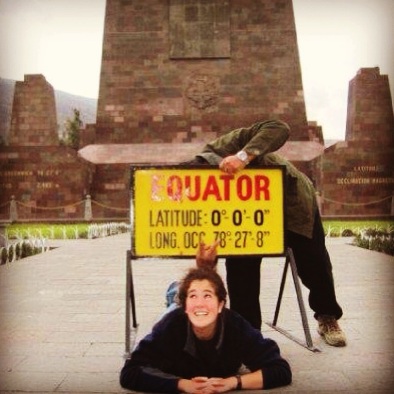
Equator in Ecuador


Madrid, Spain


Sevilla, Spain

Paris, France


Marrakesh, Morocco


Barcelona, Spain


Gibraltar


Portimao, Portugal


Munich, Germany


Edinburgh, Scotland

London, England

Friday, April 12, 2013

Castilla y Leon


During spring break I decided to venture to leave the familiarity of Andalucia and explore of new part of Spain: Castilla y Leon. This autonomous community is located just northwest of Madrid and is know for its abundance of castles, Roman architecture, medieval history, cold temperatures (due to mountainous and elevated plains), and typical gastronomy of meat and beans. I was unable to find any willing travel companions, so I reserved hotel rooms for one, downloaded a book for the trip (Ernest Hemingway's for whom the bell tolls) and hopped on the 8 hour bus ride to my first stop:


Salamanca.
Salamanca is probably most well know for its University, which is one of the oldest Universities in Spain. Spaniards and foreigners alike flock to Salamanca to study, and it is an especially good place for foreigners to learn Spanish. I felt very scholarly wandering around all the different faculties and going into the public library pretending I was a student.


Legend of the frog
On one side of the main university building there are images carved into the wall, mostly skulls and ancient looking things. However, on one of the skulls about halfway up, a frog has been carved sitting smack dab on top of the skull. The legend says that if a student of the University of Salamanca finds the frog, they will have good luck. If a non student finds the frog, they can make a wish and it will come true. Well good news, I found the frog!
University of Salamanca

See the frog?? (On the skull in the middle of the picture)


Next stop: Ávila

The coolest thing to see in Ávila are the old stone walls that were built to protect the city that remain intact and completely surround the old city. Arriving in the city and entering the old city through one of the tunnels in the walls makes a person feel like you have stepped back in time to a era where a rock wall actually could offer protection from enemies.


Last stop: Segovia

I've been interested in going to Segovia for a long time, ever since I did a report for a Spanish class on the 
Roman aqueduct in the city. The aqueduct, which was used to transport water from the river through the city, has various stories and legends about its creation. The most well known legend is that it was created by the devil himself at the request of a poor slave girl who was tired of trekking uphill all the way to the river every day. The girl made a deal with the devil, who in return for her soul, constructed the aqueduct overnight. Since that time one of the city's biggest plazas and a handful of restaurants and cafes have been built around the aqueduct, perfect for tourists and locals alike to enjoy the view. (Although its doubtful that many locals were as in awe at the sight as I was!)


Although I remain loyal to my Andalucia, I enjoyed the chance to see another part of Spain and immerse myself in all the culture, legends, castles, and history of Castilla y Leon.

Monday, March 11, 2013

Spanish Fads

I spend enough time with Spanish tweens to typically keep up with whats "cool" and "hip" (gosh I sound like my Dad...) From my observation, fads in Spain seem to spread like wildfire, and the amount of time it takes for something to get popular here is far less than in the States. Also, while it might be hard to believe, the following fads not only exist with teenagers but with the old AND the young. And me.

1. Whatsapp
This is a convenient way that everyone uses to get around super expensive text-messaging plans. Smart phones are fairly cheap here, which makes it possible for people to get this instant chat messenger. Its like text messaging, only faster and better. I know that whatsapp is not a Spanish thing, but I include it in the Spanish fads because everyone who is anyone here has whatsapp. Chatting with your friends? On whatsapp. Need to arrange a meeting? On whatsapp. Discussing work issues with a coworker? On whatsapp. Bored? On whatsapp. Or, as an Andaluz would say; wassa. 

2. British/American flag paraphernalia
"I love London! Nope, I've never been."

I see it EVERYWHERE. Whether its sweatshirts, pants, purses, belts, earrings, pencil cases, phone covers, or even shoes, to be in possession of stuff with either the Union Jack or the Star Spangled Banner printed on it is a must. Even better if you can manage to stylishly represent both at the same time, and of course it doesn't matter if you have ever visited the country in question.
To confirm this, I innocently asked one of my London, England sweatshirt-bearing students when/if she had been to London. She answered (haughtily) that no she hadn't, but es la moda. (Its the fashion).


When in doubt, wear both flags AT THE SAME TIME


3. Pou
When my students first began asking me, "Leah, tienes pou?" I was clueless of what they were talking about... but after about the fifth person asked, I decided to investigate this thing called pou.  Should I be embarrassed to admit that I am now the proud owner of the tamagatchi resembling blob-like creature called a pou?  Like tamagatchi, you must feed your pou, play games with it, put it to sleep, and dress it. Unlike tamagatchi, pou has inexplicably spread to all generations, with Spanish people as young as seven and as old as 60 playing. Its completely pointless, utterly silly, but surprisingly addicting.

Hello, Pou


A few other random fads:


-The Simpsons. Spain is about 10(?) years behind the rest of the world when it comes to the Simpsons, who are surprisingly popular here. The funny thing is, they have no idea that The Simpsons in the US have essentially come and gone in popularity.

-Katy Perry. Yes, she is popular everywhere. But I've NEVER seen fans as enthusiastic and widespread as the 13 year old female Spanish population.

-Leggings...no matter the shape, size, or age. I've never been much of a prude, but seriously? Some people could leave a little bit more up to the imagination.